Why You Can Feel Different in Perimenopause Even When Your Blood Tests Are Normal
You can feel completely different in your body and still be told that your blood tests are normal.
Your sleep has changed. Your energy isn't what it used to be. Maybe you're more anxious, more irritable, or more sensitive to sensations in your body. Your concentration feels different. Your periods may be changing.
So you get checked.
And then you hear:
“Everything looks normal.”
But you don't feel normal.
This is one of the most frustrating parts of perimenopause.
And it doesn't mean that your symptoms aren't real. It may mean that your blood tests are only one piece of the picture.
Perimenopause isn't simply about having “low hormones”
Hormones change considerably during perimenopause. But estrogen and progesterone don't decline in a smooth, predictable way. Their fluctuations can affect many systems in the body.
But there's another important piece that can get lost in the conversation:
A hormone level doesn't tell you the whole story of how you feel.
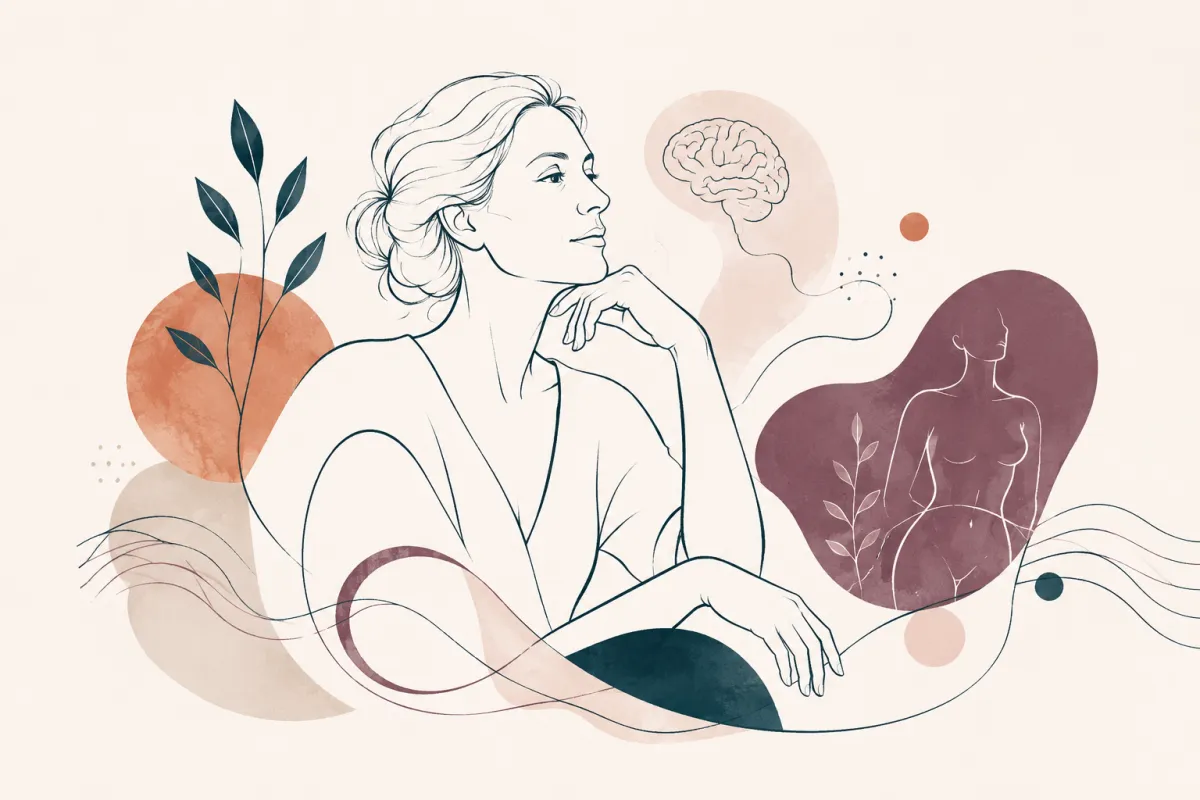
Your brain is constantly receiving information from your body and interpreting it.
Your hormones affect your brain.
Your sleep affects your brain and body.
Stress affects both.
Your previous experiences and learned patterns can influence what you notice and how you respond to sensations.
This doesn't mean your symptoms are “all in your head.”
It means that your brain and body are in constant conversation.
So what do you do when the tests are normal?
First, don't assume that “normal” means nothing is happening.
And don't assume that every symptom must be caused by perimenopause either.
That's where a broader conversation becomes useful.
Depending on your symptoms and medical history, your doctor may need to consider hormonal changes, thyroid function, iron or other nutritional issues, medications, sleep, mental health, and other possible causes.
Sometimes there is something specific to treat.
Sometimes hormone therapy is appropriate and can make an enormous difference.
And sometimes there is more going on than one physiological explanation can account for.
You don't have to choose between taking your symptoms seriously and looking at the bigger picture.
Before you go looking for the next answer, reflect on these three things:
Your body
What has actually changed? When did you first notice it? What patterns do you see in your sleep, cycle, energy, pain, digestion, temperature or other symptoms?
Your brain
What happens when you notice a new sensation? Do you immediately start worrying, monitoring or searching for an explanation? Has your relationship with your body changed?
Your direction
What else is happening in your life right now? What are you tired of? What are you craving more of? What do you want this next stage of your life to be about?
You don't have to have an answer to all of these.
The point is simply to zoom out for a moment.
Because sometimes we're so focused on finding the one thing that's wrong that we miss the bigger picture.
Sometimes we need to zoom in. Sometimes we need to zoom out.
I think both are important.
We can zoom in and look carefully at the physiology:
What is happening with your hormones? Is there something else contributing to your symptoms? Is treatment appropriate?
But we can also zoom out:
How are you living? What is happening in your life? How are your brain and body responding to one another? What do you need now?
Because you're not a collection of laboratory results.
You're a whole woman going through a significant biological and personal transition.
And sometimes the most helpful thing isn't finding another piece of information.
It's putting the pieces you already have together.
If your blood tests are normal but you still don't feel like yourself, don't stop at the result.
Take your symptoms seriously. Get the medical questions answered. And then resist the urge to keep searching for one perfect explanation.
Step back. Look at the bigger picture. Notice what your body, your brain and your life are telling you.
Sometimes clarity doesn't come from finding more answers. It comes from seeing the answers you already have in context.
If this is the kind of perspective you've been looking for, subscribe below.
I'll send you more genuinely useful information about perimenopause, hormones, the brain, the body and the bigger picture — and I'll let you know when I have something new that I think is genuinely worth your time.
No constant noise. Just useful things when I have something useful to say.
Medical disclaimer
This article is for general educational purposes and is not a substitute for individual medical advice, diagnosis or treatment. If you are experiencing new, persistent or concerning symptoms, speak with your doctor or another qualified healthcare professional.